MadEye AI Ltd: Controlling Who Gets Through Secure Doors
Some doors guard more than rooms. They guard information, equipment and people whose safety depends on getting every access decision right. Defence facilities, government buildings and other sensitive sites handle large numbers of staff, contractors and visitors, and they cannot afford a weak link at the door. A borrowed pass, a shared code or a lost card can open a path that was meant to stay closed. This is why interest in Facial recognition for defence and other high-security settings keeps growing, and why Facial recognition access control is becoming a serious option for security managers who want stronger proof of identity. MadEye AI Ltd develops edge-based AI vision technology built around these needs.
The Limits of Cards and Codes
Most access systems check something a person carries or remembers. A card, a fob or a PIN proves that someone has the credential, not that the right person is using it. Credentials can be lost, borrowed, copied or handed to a colleague. In a busy workplace, one person holding a door open for another is enough to defeat an expensive reader.
For sensitive sites, these weaknesses carry real consequences. Security teams need confidence that the person at the door is the person who was approved. They also need clear records of who entered which area and when, so that audits and investigations rest on solid information.
How Facial Recognition Access Control Works
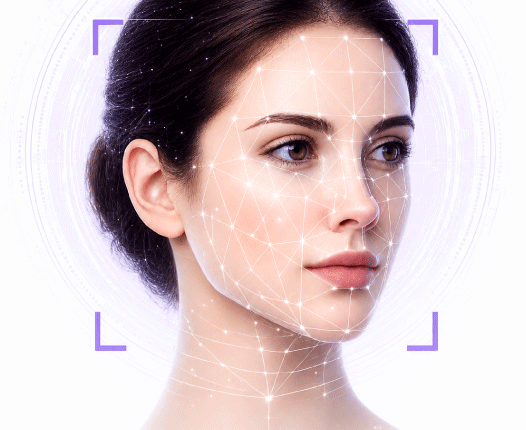
Facial recognition access control changes the question from what you carry to who you are. A camera at the door captures a face, compares it with authorised templates and passes a decision to the door controller. If the person is approved, the door opens. If not, it stays closed, and the event is recorded.
Done well, the process feels quick and natural. People look forward, walk through and keep moving. Nothing needs to be remembered, carried or touched. For security teams, each entry can be linked to a verified identity, which strengthens both control and accountability.
The quality of the system depends on practical details. It must work in changing light, from bright sun at an outdoor gate to dim corridors inside. It must handle people approaching at different angles and speeds. And it must connect smoothly to the door controllers and software that the site already uses.
Why Defence and Secure Sites Look Closely
Secure environments have extra requirements beyond convenience. They need strong control over restricted zones, such as control rooms, equipment stores and communications areas. They need reliable records. They need technology that continues to work when networks are slow, restricted or deliberately isolated. And they need to know that the system protecting the door is itself protected.
In this context, Facial recognition for defence is less about speed at the gate and more about confidence in identity and control over data. Security managers ask careful questions. Where is biometric data processed? Who can administer the system? How are communications protected? Can the system operate inside a controlled network? Clear answers to these questions matter as much as the camera itself.
MadEye AI Ltd does not claim a defence customer list, and organisations in this field should always carry out their own assessment, procurement and compliance checks. What the technology offers is a design suited to demanding environments.
Edge Processing and Data Control
Many facial recognition systems send images to a remote server for analysis. For sensitive sites, this can raise concerns. It adds delay, depends on a steady connection and means that biometric information travels beyond the door where it was captured.
MadEye takes an edge-native approach. Recognition happens on the device itself. The unit extracts and matches facial biometrics locally and sends the result immediately to the connected access control system. This brings several advantages for secure sites. Decisions are fast, because nothing has to travel to a distant server first. The door can keep working without continuous cloud connectivity. And less biometric data leaves the device, which supports tighter control over where sensitive information goes.
The Vision A64 at the Door
The MadEye Vision A64 is the company’s facial recognition access control camera. It uses dual RGB and near-infrared cameras to capture facial data, which helps it deliver reliable recognition across changing light conditions. That is important at entrances that face harsh sunlight, deep shade or mixed lighting.
It works with common access control outputs, including Wiegand and OSDP, so it can connect to the door controllers and software that sites already have. The manufacturer describes it as suitable for commercial, government and critical-infrastructure environments, with encrypted communications, controlled administration and centrally managed access. This combination helps security teams upgrade important doors without replacing everything behind them.
Managing Identities at Scale
A strong device at each door is only half the answer. Someone must decide who can enter, where and when, and keep those rules correct as people change roles, contractors come and go and visitors arrive. MadEye MVC is the company’s central platform for devices, users, access permissions and events.
For larger sites, central management simplifies daily work. Administrators can add or remove people, change permissions and review events in one place. When someone leaves a role, their access can be removed across all relevant doors at once. And as the site grows, new devices can be added to the same structure, keeping policy consistent everywhere.
Responsible Use and Governance
Facial recognition raises important questions about privacy, oversight and proportionality, and secure sites are not exempt. Operators should check the laws, regulations and internal policies that apply to them. They should be clear about what data is collected and why, collect only what is needed for access purposes, limit who can see it, set retention rules and keep audit logs of system use. They should also provide an alternative way in for people who cannot or prefer not to use face-based entry.
Edge processing helps, but good governance, clear policies and regular reviews are essential for long-term trust.
Planning a Deployment
A careful rollout makes a big difference. Begin by mapping the doors and zones that matter most and ranking them by risk. Check lighting, camera position and approach paths at each point. Review the access control equipment already installed. Decide how staff, contractors and visitors will be enrolled and managed. Run a pilot at a small number of doors, measure speed and accuracy and then expand step by step.
Training the people who manage the system is just as important as installing the hardware.
Why Choose MadEye AI Ltd
The company develops edge-native AI vision solutions for facial recognition, secure access control, identity management and privacy-first fall detection. Its technology is deployed across a range of environments, with a focus on speed, accuracy, privacy and flexible integration. For operators of demanding sites, that means technology designed around real-world conditions and a management platform that grows with the organisation.
Frequently Asked Questions
1. Does the system need a constant cloud connection?No, recognition is processed on the device itself without relying on continuous cloud connectivity.
2. Can it work with my existing access control system?It supports common outputs such as Wiegand and OSDP, so it can connect to many existing systems.
3. How are users and devices managed?MadEye MVC is a central platform for devices, users, access permissions and events.
4. Does the camera work in changing light?The Vision A64 uses dual RGB and near-infrared cameras to support reliable recognition across changing light conditions.
5. Are there privacy considerations?Yes, operators should follow local laws and internal policies, explain what is collected and offer alternatives where needed.
Conclusion
Strong security begins with certainty about who is at the door. By checking identity at the point of entry, processing recognition at the edge and managing permissions centrally, modern systems can raise the standard of control without slowing people down. With a focus on speed, privacy and flexible integration, MadEye AI Ltd helps operators protect their most sensitive doors. For organisations planning to modernise, the sensible path is to start with the highest-risk entrances, respect privacy and build from there. Done well, Facial recognition for defence can bring clarity and confidence to the places that cannot afford mistakes.